


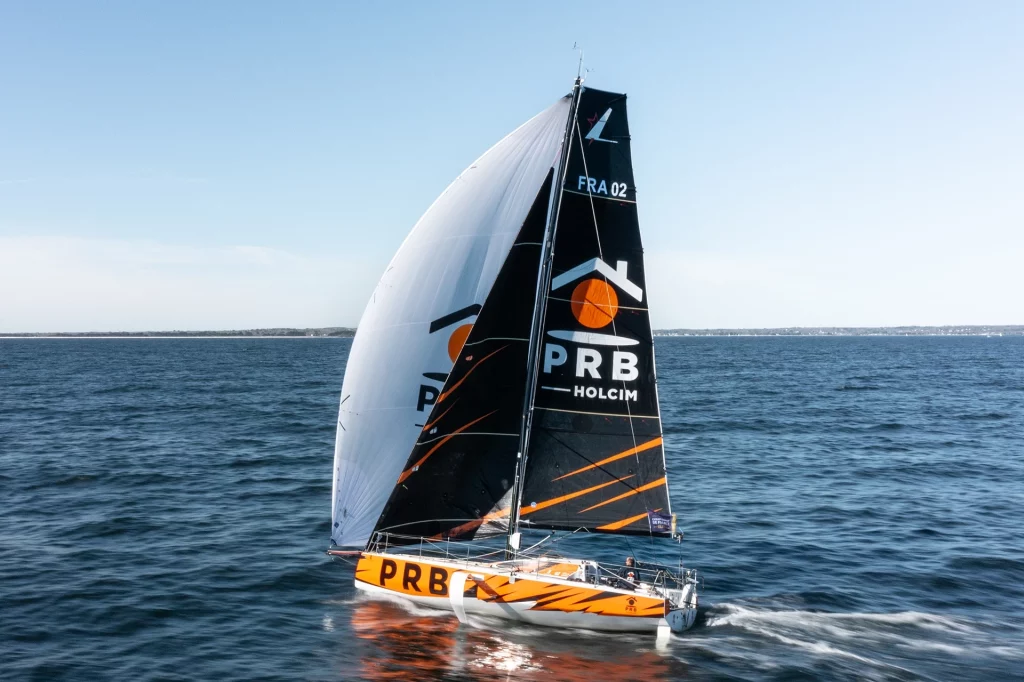
Nine years after his last appearance, Nicolas Lunven has made a spectacular comeback: a third victory in the Solitaire du Figaro Paprec, following wins in 2009 and 2017, secured during a nail-biting final leg between Pornichet and Le Havre. At 42, the PRB skipper reflects on the final hours of racing that turned the overall standings on their head, on the role Adrena Pro played in his sailing strategy, and on how he plans to utilize it in his new role with the DMG MORI Sailing Team.
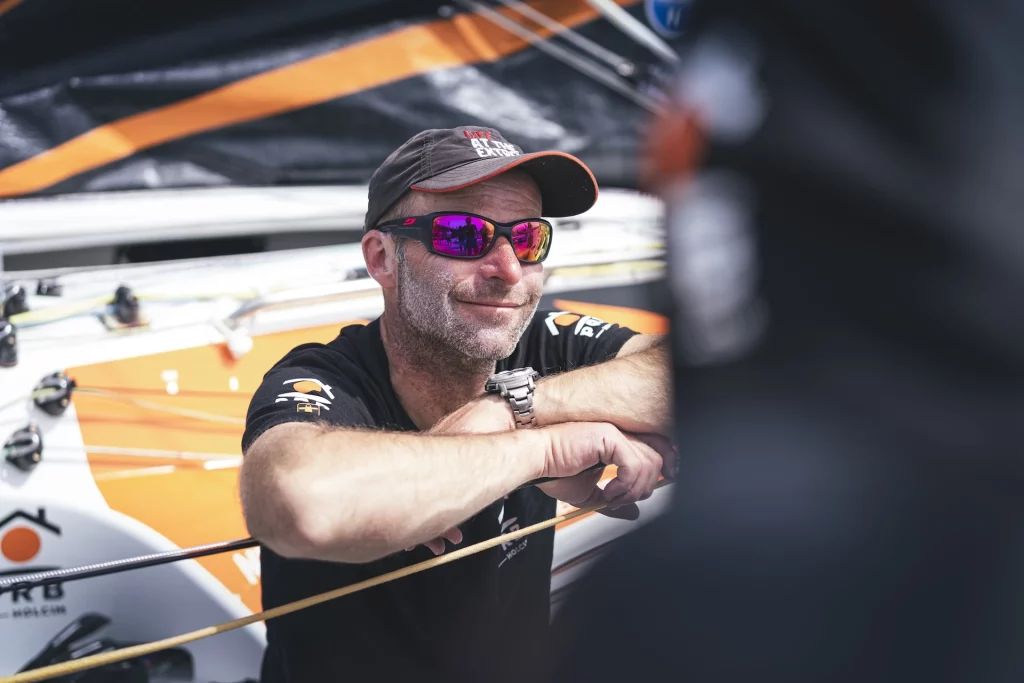
1/ Nicolas, congratulations on your victory in the Solitaire du Figaro Paprec. Can you tell us about that intense final leg?
Thank you! The final leg of the 2026 edition was indeed quite complex and intense: a long leg where we encountered just about every type of condition. We first set off from Pornichet in very mild conditions with a wind of about 15 knots, sailing downwind to the BXA buoy at the mouth of the Gironde. But quite quickly, starting on the first night, the wind became very unpredictable and died down completely: we rounded the BXA buoy in a complete lull. So it was practically impossible to sleep during that first leg. Then we headed back up toward the Occidentale de Sein, tacking in a wind that picked up to 25-30 knots and fairly rough seas. Challenging conditions! We did get a bit of a break while rounding the tip of Brittany, though, as the wind died down. Then, when we left the Iroise Sea to cross the English Channel and round the Hand Deeps buoy off Plymouth, we found ourselves sailing downwind under spinnaker with the wind strengthening to 30-35 knots and very choppy seas. A real challenge!!! Conditions remained more or less the same all the way to the Cotentin Peninsula, with some fairly violent squalls: I saw the anemometer top 40 knots two or three times! From the Cotentin Peninsula to our arrival in Le Havre, conditions calmed down a bit, but it was mainly the sea that settled down as we sailed downwind along the coast. Obviously, in those conditions, there was no way I was letting go of the helm to go to sleep…

© Julien Champolion
2/ How was Adrena Pro most valuable to you in this victory?
The Adrena software plays a vital role in navigation. This role begins even before the boat leaves the dock! Onshore, we prepare the “navigation plan” by running route simulations to define the characteristics of the leg: wind, current, sea state, key moments, etc. Adrena’s tools also let us know which sails we’ll need to use. This allows us to visualize the leg in advance, almost like a virtual reconnaissance run! I also prepare roadbooks with annotations. These roadbooks, displayed as overlays on my screen, help me make sure I don’t forget anything as I progress. Cheat sheets, so to speak!
In the Figaro class, we have very little time to devote to navigation because we spend most of our time on deck and, above all, at the helm. So we need a tool that lets us work efficiently and very quickly so as not to waste time. And then there’s real-time monitoring: the polar percentage to ensure I’m operating at 100% of the boat’s potential, and wind tracking using graphs I create that show historical data (TWD, TWS, and hPa for me).
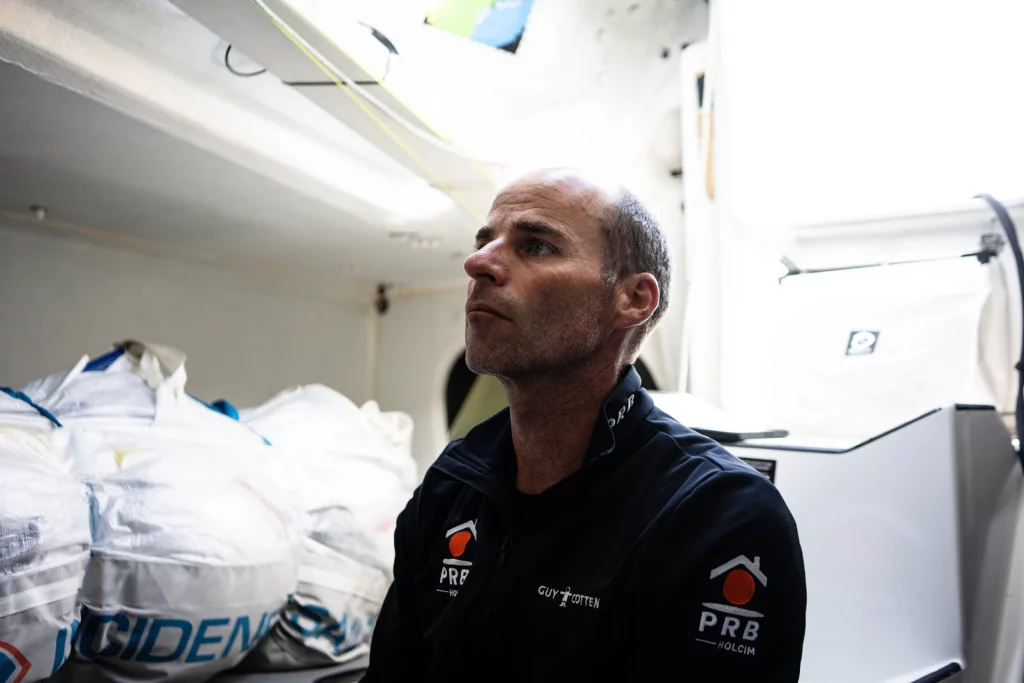
3/ Will you be relying on the software as part of your role with DMG MORI ST?
Yes, of course, Adrena will be on board the new DMG-MORI! In IMOCA racing, we devote more time to navigation than in Figaro racing, and we think in the longer term because the boats go faster and farther: strategy is generally planned on an ocean-wide scale, with all its pitfalls! Plus, in IMOCA, you have to anticipate much more, you absolutely mustn’t end up in a bad spot with a sail that’s too big for the wind strength, or end up on the wrong tack because you didn’t anticipate a wind shift early enough and the tack change isn’t ready (rigging adjustments, deploying foils, lowering the rudder, preparing for a maneuver takes a lot of time!)
© Marin le Roux